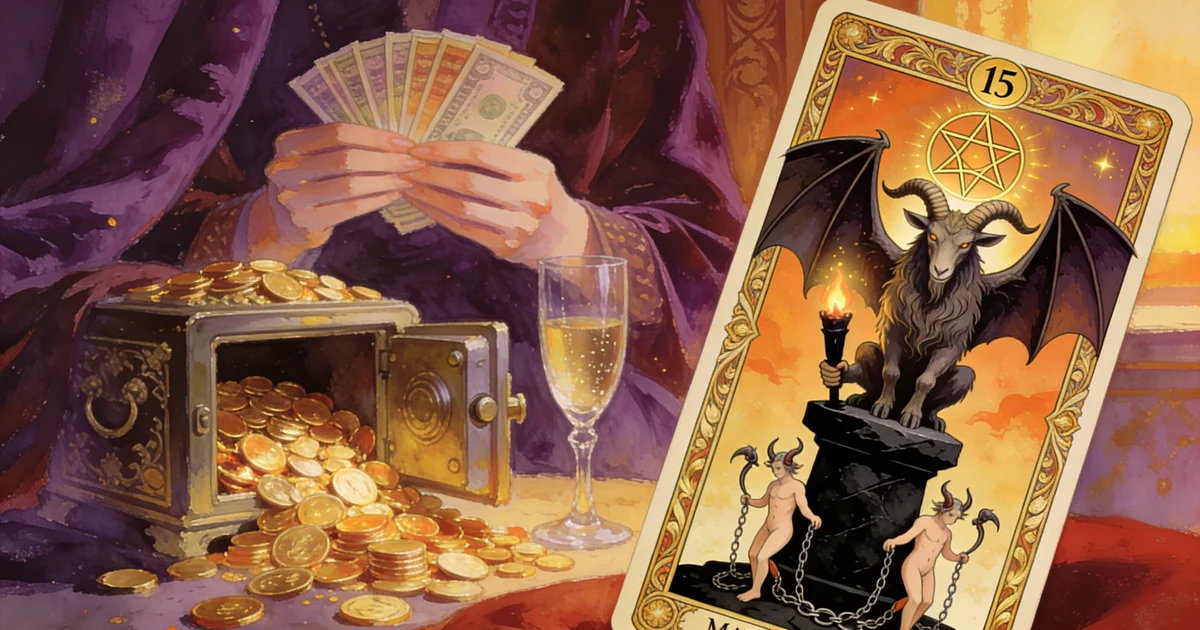
When the card of The Devil emerges in a tarot reading focused on money, it invites deep introspection about our relationship with the material world. This major arcana, number 15, is not a simple omen of bad luck, but a symbolic mirror reflecting our bonds, temptations, and the nature of our desires in the financial realm. Its appearance suggests it is time to examine what chains we have forged with gold and how our yearning for material security can become a self-imposed prison.
Meaning of The Devil in Money
The meaning of The Devil in money transcends the literal to dive into the symbolism of voluntary enslavement. This card does not speak of poverty, but of a wealth that chains. It represents those situations where the drive to accumulate, the fear of lack, or an addiction to material status clouds our judgment and ties us to circumstances, jobs, or dynamics that, deep down, oppress us. The energy of this card suggests that money has ceased to be a means and has become an end in itself, and in that process, we have surrendered part of our freedom.
The card's symbolism is key: the figures chained to The Devil's pedestal, but with loose shackles, indicate that the bonds are, above all, psychological and consented to. In a financial context, this can manifest as an emotional dependence on a salary that makes us unhappy, the inability to let go of a toxic investment out of pride, or the limiting belief that "there will never be enough." The Devil confronts us with the shadow of our ambition, asking: Do you possess the money, or does the money possess you?
The temptation represented by The Devil is not always towards excessive luxury; often, it is the temptation of comfort, of the illusory security promised by a known path, even if it is narrow and painful. The tarot's message here is an invitation to recognize these chains. It speaks of an unhealthy bond with the material where we have ceded our power, believing we have no choice, when in reality the key to liberation has always been in our hands. It is a call to reevaluate our values and ask ourselves what real price we are paying for our economic stability.
Upright Interpretation
- Bonds and Material Dependence: The card suggests a situation where you feel tied to or dependent on a source of income, a lifestyle, or a debt. There may be a feeling of being "trapped" in a work or financial cycle out of fear, obligation, or habit.
- Materialism and Excessive Desire: Indicates a period where the focus on the material—earning more, owning more, showing more—may be overshadowing other important aspects of life, such as personal freedom, ethics, or emotional well-being.
- Risky Financial Temptations: The Devil can point to the presence of a financial temptation that seems lucrative in the short term but carries high long-term costs, such as dubious investments, "get rich quick" schemes, or compromising values for gain.
- Power and Control through Money: The energy of this card can reflect power dynamics where money is used as a tool of control, whether in a partnership, a romantic relationship, or even in your relationship with yourself, creating an internal hierarchy based on what you possess.
Reversed Interpretation
- Awareness and Recognition: The reversed card marks the beginning of awakening. It suggests you are starting to recognize the financial bonds or materialism that was limiting you. It is the crucial first step towards liberation.
- Release of Financial Burdens: May indicate an active process of letting go of toxic debts, compulsive spending habits, or oppressive work relationships. It is the willingness to break the shackles, even if the process is challenging.
- Rejection of Temptation: Points to the ability to say "no" to financial offers that compromise your integrity or freedom. It is an act of reclaiming power and prioritizing long-term well-being over immediate gratification.
- Reevaluation of Values: The reversal of The Devil invites a deep reevaluation of what you truly value. The tarot's message here is one of transformation, where you begin to seek a healthier, more balanced relationship with money, seeing it as a tool and not a master.
Practical Advice
The appearance of The Devil in a money reading is a powerful call to consciousness. It is not about demonizing material prosperity, but about examining the quality of your relationship with it. A practical exercise is to take a "chain inventory": write on a piece of paper those financial situations that generate a feeling of heaviness, obligation, or entrapment. Then, next to each one, note the underlying fear that keeps you there (e.g., "fear of instability," "fear of what others will say," "fear of failure").
Observe without judgment. This act of recognition is, in itself, the first and most important step to loosening the shackles. Then, ask yourself: What small act of freedom could I take today within this situation? Perhaps it is starting to educate yourself financially to feel more empowered, setting a limit on a compulsive expense, or simply changing the internal narrative from "I have no choice" to "I am temporarily choosing this, while I create new possibilities." Liberation begins in the mind.
Final Reflection
The Devil in the context of money is perhaps one of the tarot's harshest but most necessary teachers. It does not come to punish, but to illuminate the shadows of our attachment and our fear. It reminds us that true abundance does not reside in accumulation, but in the feeling of internal freedom and sufficiency. When we manage to see money as a flow of energy we can direct with intention, and not as a deity to which we must sacrifice our peace, we begin to transmute The Devil's energy. We cease to be the figures chained to the pedestal and become alchemists, capable of using the material without being used by it.
"The most dangerous wealth is not what is lacking, but what is in excess and makes us believe we are less without it. True financial freedom begins by releasing the fear that forges our own chains."