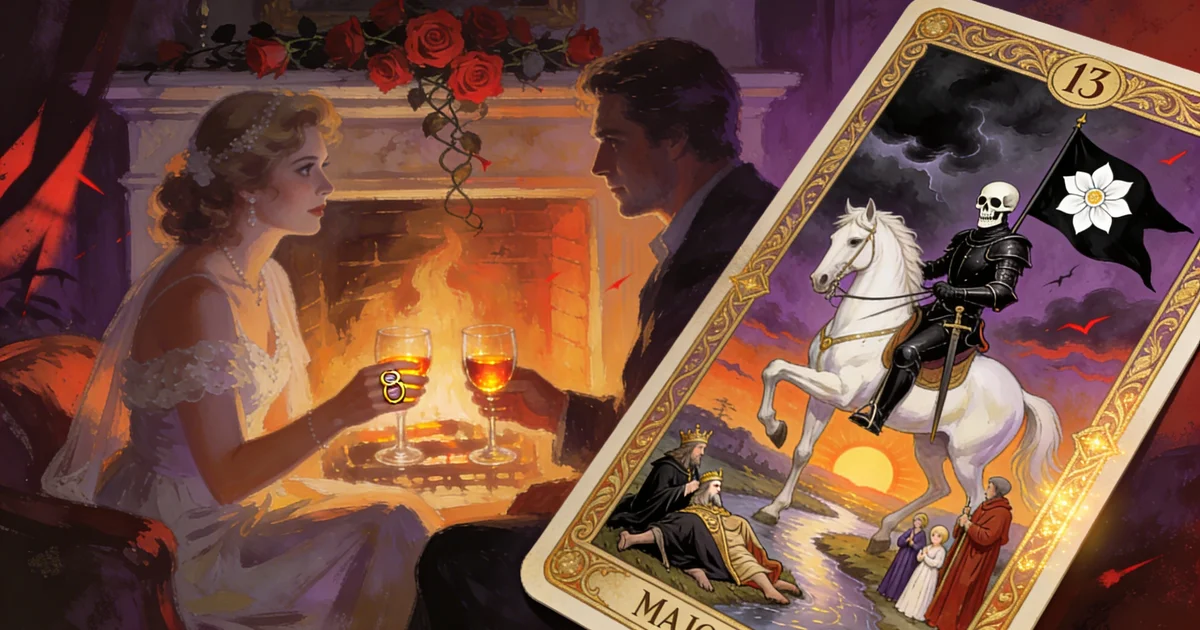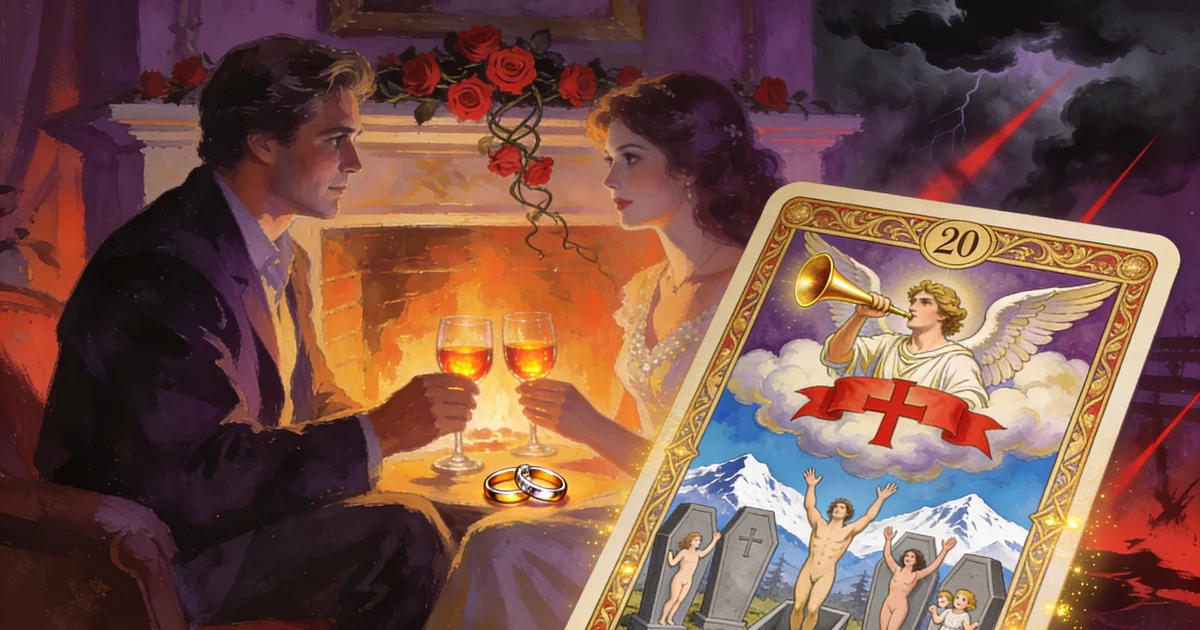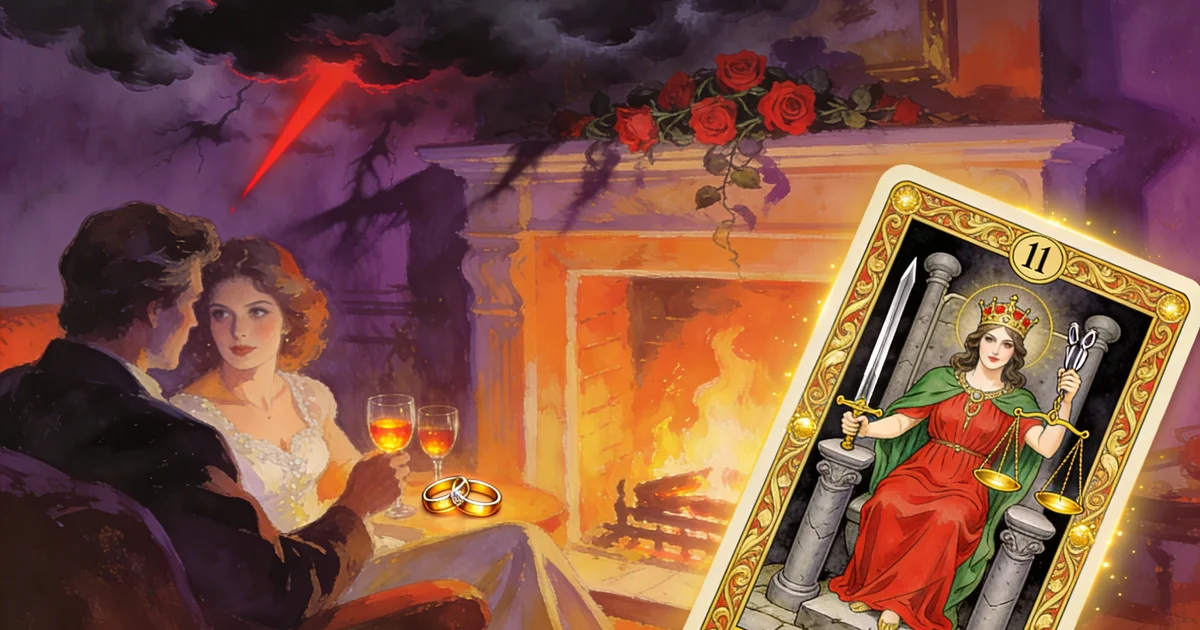

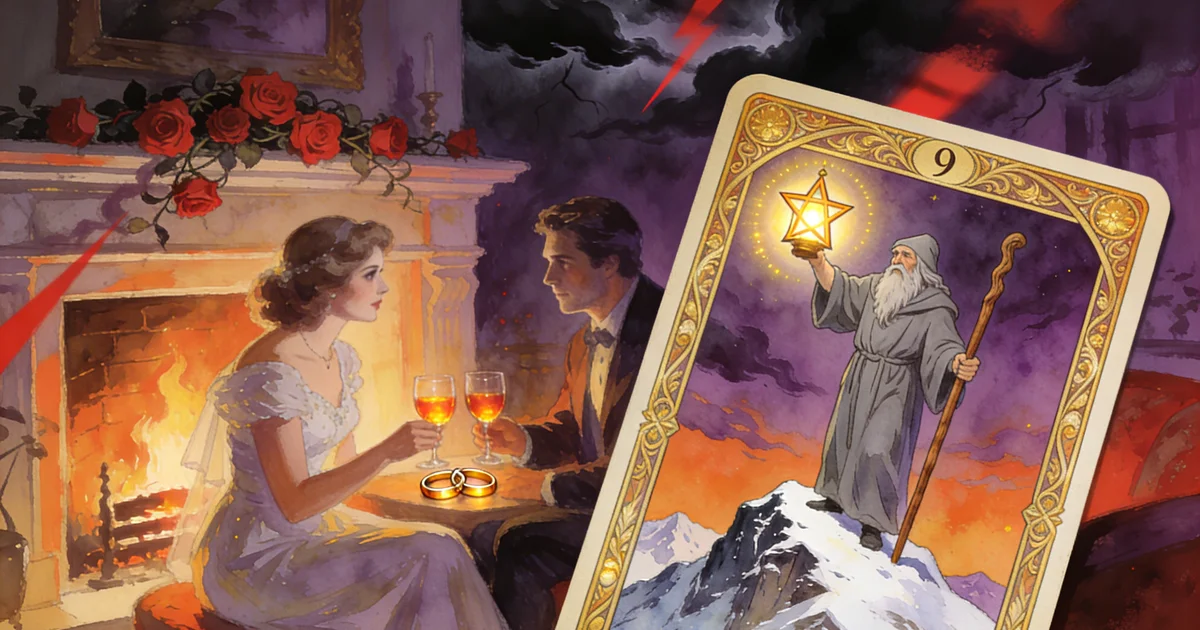
When the card of The Hermit appears in a reading about am I married, its solitary light casts a distinct shadow over the union. This Major Arcana, traditionally associated with inner quest and introspection, becomes a beacon of warning within the marital landscape. Its presence suggests that the answer to the question about marriage may be veiled by an urgent need to look inward, not as an escape, but as a sign that something in the couple's dynamic requires a pause and a deep reevaluation.
Meaning of The Hermit in Am I Married
In the context of am I married, the energy of The Hermit does not announce an immediate breakup, but a profound disconnection. This card acts as a warning about the loneliness that can exist within the bond. It suggests that one or both partners may be walking an inner path alone, not by spiritual choice, but as a consequence of emotional distance, lack of communication, or because individual priorities have overshadowed the shared project. The lantern that illuminates The Hermit does not light the couple's path, but a personal trail that moves away from the marital core.
The central warning here is against self-imposed or consented isolation within the marriage. The Hermit invites you to question: Is this solitude fertile and necessary for individual growth, or is it a symptom of evasion? Are work, hobbies, or even personal growth being used as a wall to avoid facing the relationship's problems? The card points to the danger of coupled life becoming mere coexistence, where each carries their own lantern separately, illuminating only their own ground, leaving the space they should share in darkness.
Protecting yourself energetically under this influence involves, paradoxically, not fearing the introspection the card proposes, but directing that internal gaze toward the relationship's dynamics. It is a call to make a conscious pause, not to move further apart, but to observe honestly what patterns are leading to this state of conjugal "hermitism." The Hermit's warning is clear: ignoring this call to reflection can crystallize the distance, transforming a temporary phase of introspection into a permanent state of emotional separation.
Upright Interpretation
- Sign of Emotional Distance: The card suggests a significant emotional gap may exist. The couple may be physically together, but there is a feeling of deep loneliness. It is a warning not to normalize the lack of intimate connection and deep dialogue.
- Need for a Reflective Pause: Before making impulsive decisions about the marriage, The Hermit advises a period of individual introspection. What are my real needs in this relationship? Am I contributing to the distance? This pause must be an act of clarity, not an escape.
- Loss of Shared Vision: The Hermit's lantern illuminates his own path, not a joint one. This may indicate that the couple's life goals, dreams, or core values have become misaligned. The warning is about moving forward without reevaluating if they are going in the same direction.
- Excess of Self-Sufficiency: In a marriage, healthy interdependence is key. The Hermit upright can warn of an "I can handle everything alone" attitude, closing the doors to vulnerability and mutual support, weakening the union's foundations.
Reversed Interpretation
- Rejection of Necessary Introspection: The reversal of the card intensifies the warning, signaling an active refusal to look within oneself or the relationship. There is a tendency to blame the other or external circumstances, avoiding all personal responsibility in the problematic dynamic.
- Toxic or Forced Isolation: The loneliness is no longer a contemplative choice, but an imposition or a state of alienation. It may indicate episodes of prolonged silence (the silent treatment), emotional abandonment, or the feeling of being trapped in a relationship with no way out or communication.
- Harmful External Advice: The reversed Hermit can warn about the influence of people outside the couple who, with not always clear intentions, foster isolation or offer advice that pulls the couple away from resolving their problems on their own.
- Stagnation in Negativity: Instead of using introspection to grow, there is a risk of falling into a cycle of negative thoughts, self-pity, or resentment that further poisons the conjugal atmosphere. It is a warning against emotional lethargy.
Practical Advice
The warning of The Hermit in am I married requires conscious action, not passivity. Instead of retreating further into your shell, use this card's energy to initiate directed introspection. Set aside time alone, but with a clear purpose: to reflect specifically on the relationship. Write in a journal honest answers to questions like: "What emotion predominates when I think of my partner?", "When was the last time we connected deeply?", "What am I avoiding facing?".
Afterwards, and this is crucial, raise the need for a calm, non-accusatory conversation. Propose a mutual "time-out" to share reflections, not to find culprits. You can use phrases like: "I've been thinking about us and I feel we've grown distant. I would like us to talk about how we feel and what we can do to reconnect." Protect your energy by setting clear boundaries: if the conversation becomes destructive, propose postponing it, but with a new defined time. The Hermit's warning is mitigated by transforming solitude into a space for clarity, and then using that clarity to build bridges, not to dig deeper trenches.
Final Reflection
The tarot's message through The Hermit in this context is a solemn and loving wake-up call. It reminds us that the greatest danger to a marriage is not always noisy conflict, but the silence that settles between two people who share a roof but have stopped sharing their inner world. This card does not come to predict an end, but to illuminate a crossroads: one that leads to permanent disconnection and another that, through the courage of authenticity and renewed dialogue, can lead to a more conscious and true reunion.
"The Hermit's light is not just to illuminate your path, but so you find the courage to show another where you stand, and thus, perhaps, walk together again."