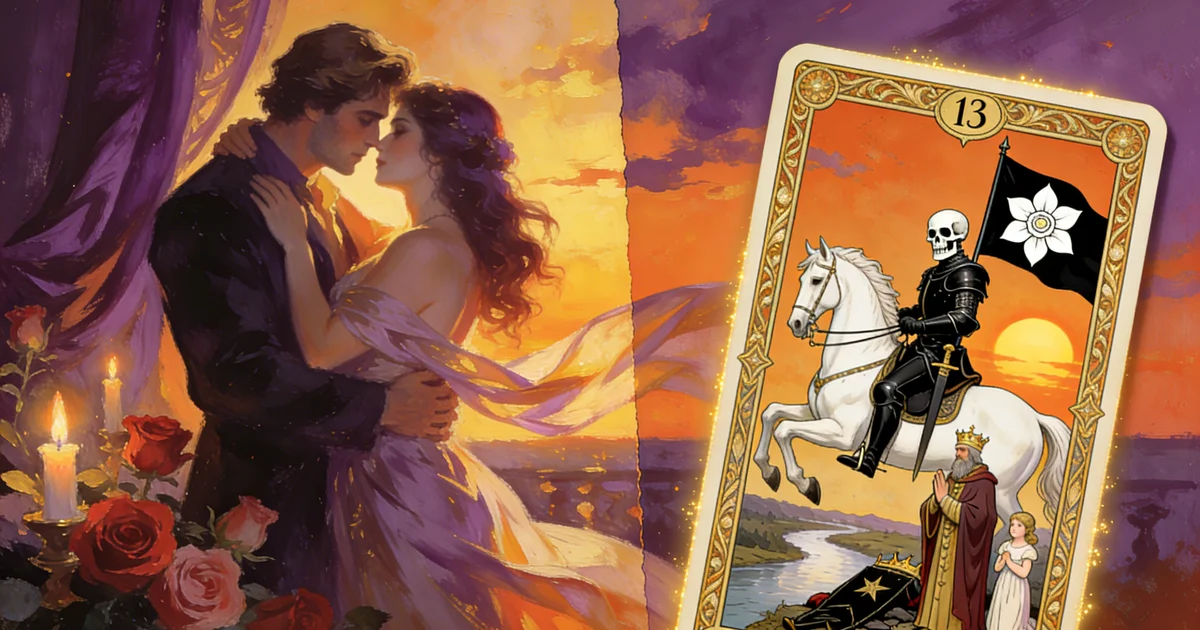

When the card of The Hierophant appears in a love reading, the tarot invites us to look beyond passionate impulse and delve into the realms of tradition, structure, and shared values. This archetypal figure, also known as The Hierophant or The Pope, does not speak of fleeting romances, but of connections that seek deep roots and a meaning that transcends the merely emotional. In the context of a love question, its presence is a beacon illuminating the path toward commitment, conventional wisdom, and, sometimes, the need to follow certain rules of the heart.
Meaning of The Hierophant in Love
The Hierophant is the guardian of traditions, institutions, and established beliefs. In the realm of love, this energy translates into relationships that seek formality, stability, and a mutually agreed-upon framework of values. It is not the card of rebellious or forbidden love; it is the card of love that is consecrated, celebrated under a roof of social or spiritual commitment. Its appearance suggests that the love in question is, or could be, guided by higher principles, a shared ethic, or the desire to build something lasting and recognized, whether through marriage, a solemn promise, or a union based on deep compatibility of beliefs.
This card can also point to the influence of counselors, family, or traditions on the relationship. The Hierophant acts as a bridge between the divine and the human, and in love, it can represent the search for guidance, whether in an external figure of wisdom (a friend, a therapist, a spiritual leader) or in the internal wisdom that comes from respecting our own core values. It speaks of learning the "rules" of healthy commitment, respectful communication, and patience. It is not a passionate energy in the fiery sense, but it is deeply devoted and loyal.
However, the shadow of The Hierophant in love can manifest as rigidity, excessive conformity, or the feeling that the relationship follows a script predetermined by external expectations (familial, social, religious). The card asks us: Are we loving from authenticity or from what "should" be done? Does the structure we've built liberate us or limit us? The key is to find the balance between the wisdom of tradition (what has worked to build solid relationships) and the unique, personal truth of the connection being lived.
Upright Interpretation
When The Hierophant presents itself in an upright position, its message in love focuses on the conscious and ethical building of a bond. Some of its key manifestations are:
- Commitment and formalization: It is a strong indication of relationships moving toward more serious and formal stages. It can point to engagement, marriage, or the decision to establish clear rules and structures within the partnership.
- Alignment of values: The relationship is based on deep compatibility of spiritual beliefs, morals, or life visions. There is mutual respect for each other's principles.
- Seeking guidance or advice: Suggests it is a good time to seek external wisdom, such as couples therapy or counsel from a respected person, to navigate a challenge or consolidate the union.
- Conventional and stable love: Points to a love that may not be dramatic, but is deeply safe, reliable, and built on solid foundations. It is the energy of "enduring love."
- Mutual learning: The relationship serves as a space where both grow, learn important lessons about commitment, and teach each other.
Reversed Interpretation
In a reversed position, The Hierophant invites us to question the structures and conventions surrounding love. Its energy becomes distorted or blocked, manifesting in the following ways:
- Rebellion against conventions: May indicate a relationship that openly defies family or social expectations, or a desire to break free from rigid rules that stifle the connection.
- Rigidity and dogmatism: The relationship may become too rigid, with one person imposing their beliefs or "rules" inflexibly, generating resentment.
- Inauthentic conformity: Staying in a relationship due to social pressure, family tradition, or fear of breaking conventions, even if there is internal unhappiness.
- Rejection of commitment: Fear of formalization or the structures that a serious commitment entails, preferring to keep things informal or in a state of ambiguity.
- Poor guidance or advice: Making decisions based on unwise counsel or external pressures that do not resonate with the inner truth of the couple.
Practical Advice
If The Hierophant has appeared in your reading, it is time to reflect on the structures of your love life. We invite you to ask yourself these questions honestly:
- Examine the foundations: What values does my relationship (or my desire for one) truly rest upon? Are they authentic and shared values, or are they imposed?
- Seek wisdom, not permission: If you need guidance, turn to sources of genuine wisdom (therapy, books, people you admire) that help you clarify your own values, not dictate what to do.
- Negotiate tradition: As a couple, talk openly. Which inherited traditions or structures (about roles, commitment, family) do you want to keep? Which ones need to be adapted or let go so love can flourish authentically?
- Define your own ritual: Creating small rituals of connection (a weekly screen-free dinner, a walk to talk) can be a modern and personal way to honor The Hierophant's energy of commitment and devotion, without rigidity.
Is It a Yes or a No?
The energy of The Hierophant does not lend itself to a clear-cut, simple yes or no. Its message is conditional and depends entirely on the context and intention behind the question.
It leans toward a YES when... the love question is related to formalizing, committing, following a traditional path, or basing the decision on solid, shared values. If you ask: "Should I commit?", "Is this a serious relationship with a future?" or "Should I follow my family's advice about this person?", the card, upright, suggests a cautious yes. It affirms that there are stable foundations, potential for a lasting bond, and that following conventional wisdom (or your own moral compass) is appropriate.
It leans toward a NO when... the question seeks validation for a purely passionate, rebellious, or non-conventional love that rejects all structure. It is also a reflective no if the current relationship is rigid, oppressive, or maintained only for appearances (especially if the card is reversed). If you ask: "Should I ignore what others think and follow my heart impulsively?", The Hierophant, in essence, will tell you no. Its advice is to pause, consider the consequences, and seek a path that, even if different, has its own integrity and structure.
In essence, The Hierophant responds: "Yes, if you are willing to honor commitment and values. No, if what you seek is to evade all forms of structure or remain in one that suffocates you."
Final Reflection
The Hierophant in love reminds us that the deepest relationships often require a framework, a set of conscious agreements, and a devotion that goes beyond momentary feeling. It does not fear traditions, but challenges us to make them our own, to live them authentically. Its appearance is an invitation to build with awareness, to seek wisdom in the bond, and to understand that love, in its most mature form, is also a path of mutual learning and growth within a space of sacred respect and commitment.
"Love is not just a feeling; it is also a temple built day by day with the bricks of respect, the word given, and shared wisdom."