When the Death card emerges in a reading about an ex-partner, the soul trembles. Far from the literal omen its name evokes, this Major Arcana number 13 whispers in the language of the soul about necessary endings, deep transformations, and the promise of personal rebirth. In the specific context of "will my ex come back," Death does not answer with a yes or a no, but invites a radical introspection about what truly needs to die within you so that something new, and perhaps more authentic, can be born.
Meaning of Death in "Will My Ex Come Back"
The appearance of Death in this context is one of the most powerful and liberating teachings the tarot can offer. Its energy is not focused on predicting the physical return of a person, but on pointing to an internal transformation so profound it will forever alter your relationship with that past. The card suggests you are at a turning point where clinging to hope, to the idealized memory, or to the pain of that relationship itself, is like trying to stop the change of seasons. The tarot's message here is clear: something must conclude so that the essence can be freed and reorganized into a new form.
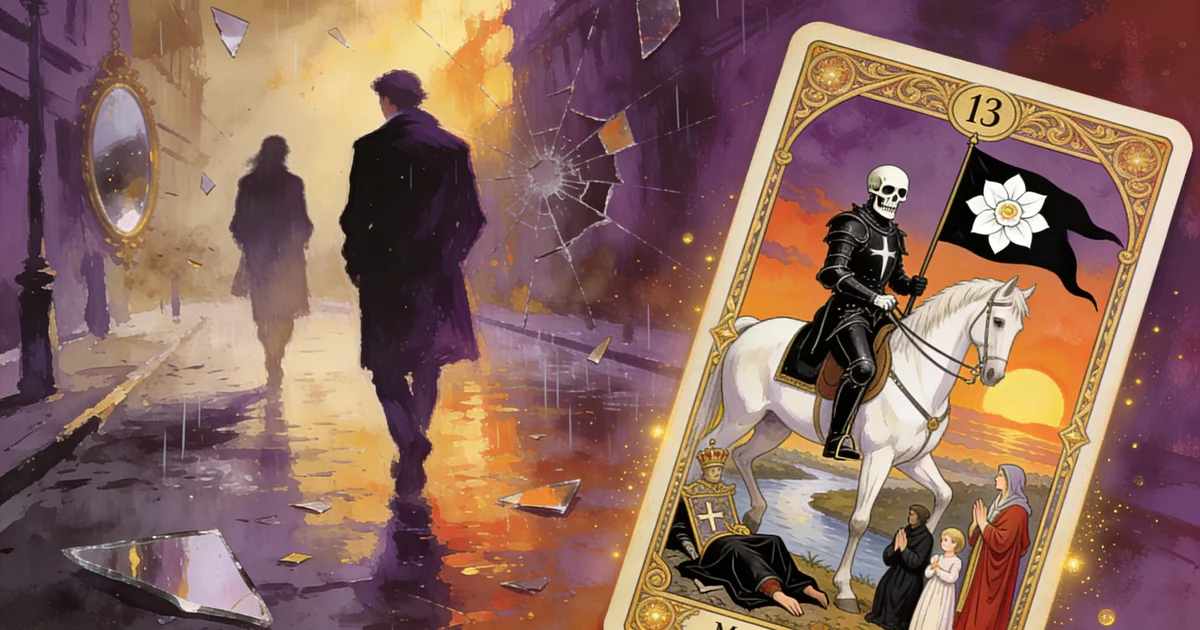
The symbolism of Death speaks of an alchemical process of the heart. The white knight's armor lying on the ground represents the defenses, rigid structures, and identities ("the suffering ex-partner," "the abandoned person") that no longer serve you and must be left behind. The river in the background symbolizes the constant flow of life and emotions, reminding you that stagnating in a past moment goes against the very nature of your being. The card does not judge the love that was, but indicates that its cycle as you knew it has reached its natural end.
Therefore, asking "will my ex come back?" under the gaze of Death is perhaps asking the wrong question. This card's energy redirects the gaze inward: What part of me needs to "die" along with that relationship? What habits, emotional dependencies, or limiting narratives must I release to be reborn stronger and more whole, with or without that person? Death does not close doors out of cruelty, but so you can see the light entering through the new window opening in your soul.
Upright Interpretation
- Radical Transformation: The main message is one of inevitable and profound change. The dynamic you knew with that person is over. Any future reunion, if it were to happen, would be based on completely new and different terms, not on recreating the past.
- Release and Letting Go: The card advises actively letting go of attachment to the outcome, to the person, and to the form the relationship took. It is a call to release control and allow life to carry you toward your next phase of growth.
- End of an Emotional Cycle: It indicates it is time to close the chapter emotionally. This means stopping reliving conversations, analyzing mistakes, or feeding hope obsessively. It is the end of that state of mind.
- Personal Rebirth: The promise hidden behind the ending is that of a rebirth. By accepting closure, you give space for a wiser, more independent, and more powerful version of yourself to emerge.
- Truth and Clarity: Death sweeps away illusions. It invites you to see the relationship and its end with raw and liberating honesty, acknowledging both the good and what didn't work, without romanticizing.
Reversed Interpretation
- Resistance to Change: Indicates you are clinging tightly to the past, refusing to accept the ending. This resistance is the main source of your stagnation and pain.
- Fear of Letting Go: There is a deep fear of loneliness, the unknown, or facing life without that person or without the identity the relationship gave you. The reversed card points out that this fear has you paralyzed.
- Emotional Stagnation: The energy of transformation is blocked. You may be repeating patterns, idealizing the past, or contacting your ex in ways that hinder your own healing and evolution.
- Prolonged and Painful Endings: By not accepting the natural closure, you are creating a slow and agonizing ending. The card suggests your current suffering comes from not letting go, not from the fact of the end itself.
- Need for Active Acceptance: It is an urgent wake-up call to take the reins of your grieving process. You must actively choose to let go, even if it hurts, to free yourself from this emotional limbo.
Practical Advice
Death's teaching is active, not passive. It's not just about waiting for time to heal, but about consciously participating in your transformation. I invite you to perform a symbolic farewell ritual: write a letter to your ex-partner expressing everything you feel, thanking what you learned, and declaring your intention to move forward. Do not send it. Then, safely burn it, visualizing how the fire transforms attachment and pain into ashes that will fertilize your new beginning. Another powerful exercise is to identify a limiting belief that arose from the breakup (e.g., "I'll never find a love like that") and reframe it into a personal power affirmation (e.g., "I am opening myself to a love that honors who I am now"). Practice this new narrative every day.
Final Reflection
Death, in its silent wisdom, reminds us that true love never dies; it transforms. What can and must perish are the attachments, rigid expectations, and roles that no longer contain us. In the context of an ex-partner, this card is a severe but loving ally that pushes us to bury what no longer lives to give space to what is destined to flourish within us. It is not an answer about another person's path, but a clear map for your own journey toward wholeness. By embracing its message, you stop searching in the broken mirror of the past for the reflection of your future.
"Do not fear the death of the chapter, fear the life that refuses to write the next one. Death does not steal loves; it frees love to find its eternal form in your evolution."